


Deepak is a social technopreneur with extensive exposure to using technology for social advantage. Deepak has created various path-breaking organizations and pioneered various innovative initiatives to solve problems faced by businesses and society, with creative use of cutting-edge technology like Artificial Intelligence, Machine Learning, Blockchain, IOT, and Cloud/Fog Computing.
I AM TAXONOMY BUSINESS PAGE
YES I AM A DLC_COMMITTEE TAX PAGE
Committee: Hardware
The Hardware (Internet of Things) sub-committee leaders in the ITES domain will focus on providing value-added knowledge on physical objects—a.k.a. “things”—that are embedded with sensors, software, and other technologies for the purpose of connecting and exchanging data with other devices and systems over the Internet for Smart Connectivity (e.g, smart parking systems, infra techs, Agriculture, Energy management)
For example – AI Enable Medical IoT Devices can have applications like – IoT in Smart Manufacturing, Clinical Decision making,Thermal Image Recognition, Surgical Assistance, Smart Clinics & Telemedicine Center and many more
What is NFTs and will NFTs (non-fungible tokens) in Video Games benefit the Gaming Industry
The worldwide gaming industry creates income across three market subsets: portable, PC, and control center gaming, which together are esteemed in the many billions of dollars and development. Nonetheless, while industry occupants benefit from this strong development, players create a minimal enduring incentive for themselves. Subsequent to putting resources into the costly control centers, computers, or cell phones, players enter gaming conditions that offer a layered admittance client experience. In these conventional games, cash streams in a single heading: Players should burn through cash to access in-game substance and selective highlights.Conversely, blockchain-empowered games – a large number of which are decentralized applications (dApps) – center all the more intensely around producing an incentive for players. This dynamic presents a change in perspective that permits players to more readily catch the utility and worth of resources gained through in-game buys, standard ongoing interaction, or special occasions. For example, when a player buys a defensive layer update in a customary game, their main advantage is improved interactivity inside the setting of that one game. Notwithstanding, in a gaming environment that uses cross-stage non-fungible tokens (NFTs), a similar coverage can be tokenized in a manner that changes in-game buys into adaptable resources that might present advantages across interconnected games or be traded for cash or other computerized resources.Fundamental blockchain networks empower the age and arrangement of these NFTs inside various gaming conditions. Since NFTs are one of a kind and can be intended to hold esteem past the game in which they started, blockchain-constructed games can possibly grow gaming economies emphatically, layout new gaming classes, and fuel the improvement of new games. To investigate how this cycle could unfurl, getting NFTs’ significance first.Non-Fungible Tokens 101Non-fungible tokens aren’t selective to the blockchain gaming industry. These tokens can address computerized and genuine resources like craftsmanship, land, collectibles, and, surprisingly, individual personality. Subsequently, NFTs have a wide scope of functional applications that enticement for different ventures and use cases, and their reception is speeding up. Rather than most other computerized tokens, NFTs show three particular attributes:Non-fungibility:As the name suggests, each NFT is a cryptographic symbolic that addresses something special or non-fungible, meaning it’s not tradable with another NFT. The metadata inside each NFT exists as a long-lasting, unalterable record on the blockchain. This record depicts what the token addresses, like a declaration of realness, as well as the symbolic’s possession history and exchange record (title). Conversely, numerous digital currencies, for example, bitcoin (BTC), ether (ETH), and other utility tokens are fungible – i.e., one BTC is actually indistinguishable from some other – and consequently are not extraordinary in this sense. Extraordinariness:The shortage of each NFT is a significant part of what makes them alluring. For example, in the CryptoKitties game, clients gather and breed computerized felines that are each epitomized by an assigned NFT. A portion of these CryptoKitties is viewed as uncommon collectibles, which thusly expands their asking cost among gatherers who esteem their provable shortage. In 2018, a CryptoKitty named Mythical serpent sold for 600 ETH, which was what might be compared to $170K at that point.Unbreakable quality:Digital forms of money like bitcoin are distinct into more modest units, given their fungibility and planned use as a mechanism of trade. Interestingly, most NFTs should be purchased, sold, and held in a general unit and are in this manner unbreakable – similarly that you can’t buy 10% of a show pass or 60% of a boarding pass.Now that we’ve talked about the characterizing attributes of NFTs, we can start to investigate the benefits of conveying these tokens with regard to web-based gaming.
The Advantages of Gaming NFTsAlbeit numerous NFTs utilize Ethereum’s ERC-721 symbolic norm, NFTs are additionally common in a few different organizations, like TRON (Blockchain Sweeties), EOSIO (EOS Knights), and NEO (Blocklords). The many advantages of decentralized ongoing interaction include:Possession:Customary in-game buys are one-time, non-transferrable ventures that remain secured in a solitary gaming world. Interestingly, involving NFTs in gaming conditions awards players responsibility for in-game resources rather than game designers. Through blockchain innovation, gamers can save in-game buys, offer them to different players, or move them into other upheld games.Provable Shortage:Gatherers esteem extraordinariness and credibility, and the shortage of in-game NFT buys is provable through the unchanging records inserted in a NFT’s fundamental blockchain network. This dispersed public record approves the number and uniqueness of each NFT as well as its proprietorship history.Interoperability:Conventional web-based games exist on unified servers. Thusly, in-game resources exist inside exclusive frameworks that don’t speak with others. Conversely, decentralized games exist on free blockchains that go about as the backend structure for other interconnected games. Therefore, game resources addressed by NFTs can be intended to be interoperable across various conditions. For example, two games based on the Ethereum organization can possibly uphold something similar to in-game resources like vehicles, shields, or even whole characters.Permanence:When a customary internet game closes down, clients customarily lose all of their in-game buys. NFTs, notwithstanding, exist freely on a particular gaming stage and live on the blockchain itself. In that capacity, in-game buys can be traded paying little heed to what befalls the game, and new games can be intended to plug into a current blockchain convention. Moreover, blockchain-empowered game resources can’t be copied or messed with in light of the super-durable record each NFT produces upon issuance.NFTs and the Fate of the Blockchain Gaming IndustryAlbeit the reception of NFTs in the gaming scene accompanies benefits, it likewise presents critical hindrances to survival. Most quite, NFTs should be made really engaging and instinctive to standard purchasers who probably won’t be in fact arranged. Furthermore, on the grounds that NFTs have inherent worth, there’s a gamble that some will be utilized overwhelmingly as speculative resources. This probability could propel players to buy in-game resources with the desire for selling them for future benefit as opposed to involving the resources inside the gaming environment as planned.In spite of these difficulties, the potential for benefit inside the gaming business will rouse more non-blockchain-centered brands to explore different avenues regarding NFTs, probable by shaping associations with outsider blockchain projects that have the specialized ability expected to rejuvenate their vision. All the while, the more extensive outcome of gaming dApps will probably assume a part in further catalyzing NFT foundation upgrades and driving the advancement of imaginative solutions that unlock mainstream adoption.
IoT in Smart Manufacturing, Smart Clinic & Telemedicine
Introduction
How the Internet of Things (IoT) has become a sensational phenomenon?
It is the influence on the global network of data exchange and communication that has made it immensely popular in almost every industrial sector across the globe.
Furthermore, the rise of industrial IoT has led to the widespread utilization of automation in the industry. Moreover, it has also opened up new doors of opportunities ranging from embedding building blocks to devices using cloud services, and much more.
Such is its sway that every industry whether it is smart manufacturing, smart healthcare, and even telemedicine is incorporating IoT app development services. Besides, it will make sure that every prospect involved in the given sectors can avail benefits of the IoT to improve their fortune and make the life of people easy and safe.
The given blog will offer a glimpse of the power of IoT and how it has made a positive impact on three crucial sectors (smart manufacturing, smart clinic, and telemedicine). Further, it will also consolidate the dominant position of IoT in this digital world.
IoT & Smart Manufacturing: Driving Key towards Industry 4.0 Transformation
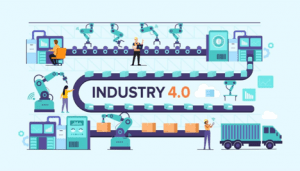
Before proceeding forwards, first of all, we must understand the concept of smart manufacturing. It is essential to answer the following question:
‘What is smart manufacturing. How is it related to IoT?’
Smart manufacturing (SM) is an approach that uses internet-based automation prospects and combines them with data analytics to enhance manufacturing performance.
Smart manufacturing solutions help factory managers to collect data automatically and analyze them to optimize production.
Now, how does IoT assist Smart Manufacturing in improvising their production?
The exciting part about the given technology is that it combines the best part of both wired and wireless connections and leverage it to monitor and manage the process in real-time. There’s more,
Taking the help of a reputed IoT application Development Company is good because you can:
- Latest Technology Stack on IoT implementation
- Forward-looking hardware and software
- Improve manufacturing outcomes
- Speed-up production
- Waste reduction
- Establish Overall Equipment Efficiency
There’s another secret that IoT comes up for Smart Manufacturing! It provides meaningful full insights on your production processes, resource utilization, the productivity of machine & workforce etc. It offers meaningful insights into the consumption of products by consumers. If you assess it, understanding features to provide real needs to the consumer at the marketplace are not a problem.
In the next step, we will evaluate current market statistics. Let’s move on.
A view of IoT in Industry 4.0
In the manufacturing sector, IoT Platform development is a hot topic of discussion, especially among people in management positions. According to the study from IDC, IoT-powered operations have seen a massive improvement of over $470 billion in value per year.
Modern smart factories have seen the biggest boost in their performance after implementing IoT and smart sensors. Now, IoT-enabled smart manufacturing (industry 4.0) shall see an annual growth rate of 12.4% by 2025.
Apart from them, another fact reveals the complete dominion of the IoT ecosystem in the SM. The projection of the global market for industry 4.0 will scale upwards from US$90.6 Billion in 2020 to US$219.8 Billion by 2026.
What do these facts signify?
It indicates optimization of IoT in smart factory 4.0 enhances business profitability. Moreover, implementing IoT helps smart manufacturing companies to offer automation solutions at reduced cost with no compromise on quality.
IoT Trends in Industrial Manufacturing
IoT is revolutionizing the world of industrial manufacturing manifold. It has made it possible in creating connected products and develops a service-based prototype to prepare the manufacturing sector with full digitalization.
Several trends will define the next path for industry 4.0:
1. Rise of M2M Automation
Machine-to-Machine Automation will become part of every manufacturing product to communicate and automate decisions with no involvement of human interactions. To make it more feasible, integrating data with enterprise software is the most probable solution.
2. Secured Cloud Solutions
Contrary to others, cloud-based IoT networks are less likely to get attacked by data breaches. Similarly, the evolution of information assurance (IA) services will likely reduce more cyber- attack.
3. IoT Data will Gain Prominence in Future
In the future, security will be given paramount importance by manufacturing sectors. So, they will collect big data from IoT platforms for any predictive analysis and generate a lot of digital insights over a period of time.
4. IoT & ERP will Modernize Supply Chain
There will be unique visibility in the supply chain, all thanks to a combination of ERP into IoT. Sophisticated ERP software will combine IoT to share and analyze data to make smart decisions and make accurate predictions for a better future.
IoT in Smart Clinic: Exploring New way of Smart Healthcare with IoT
Before moving forward, first, we will get our readers to understand the concept of the ‘smart clinic.’
As per the medical experts, smart clinics are a group of private healthcare service providers who thrive on delivering the best healthcare services through home monitoring tools, skin sensors, and wearable. Likewise, it is the place where a network of hospitals with their people, infrastructure, clinical processes, etc., comes under a single system to offer effective healthcare.
There are several and varied benefits that come with IoT-based Smart Clinics. They are as follows:
- IoT systems ensure safety for physicians and patients
- IoT system permits physicians to monitor patients with a high level of precision
- It allows easy integration for future-proofing
The next step will help the reader to analyze the market states about the smart clinic.
A view on IoT in Smart Clinic
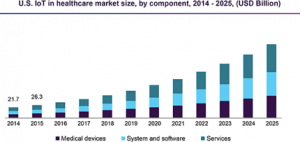
After the havoc played by COVID-19, the healthcare sector was smart enough to use IoT technology in the creation of a ‘smart clinic’. In addition, the emergence of technologies such as Artificial Intelligence (AI) and Machine Learning (ML) is driving the market demand for smart healthcare services.
Additionally, multiple facts showcase the importance of IoT in the smart clinic, such as:
- Global IoT in the healthcare market is expected to reach US$ 60.83 Billion (2019) to US$75 Billion (2027)
- By 2027, government healthcare institutions will account for about 15% of the market share in IoT-run smart clinic
As per the above facts there is a surge in the need for cost control measures. Moreover, a sudden increase in the demand for patient-centric care has compelled smart hospitals to opt for IoT connectivity.
Also, the arrival of Artificial Intelligence in healthcare has allowed healthcare providers to bank on real-time data for offering immediate healthcare services. This is where IoT technology help to develop connected devices to provide the data the healthcare provider seek for their information.
IoT Trends in Smart Clinic
With the dawn of 2022, several trends will define the essential role of IoT in the smart clinic. Some of them are:
a. Improvise Connectivity through 5G & Edge Computing
IoT app development solutions have opened vast floodgates by improving connectivity in healthcare services. It has been made possible through two innovative solutions: edge computing and 5G networks.
- 5G Networks: It offers greater security and high scalability. Besides, it also improves remote monitoring for patients and equipment.
- Edge Computing: It works with 5G to create decentralized infrastructure to minimize bandwidth issues and latency.
b. Remote Monitoring will Expand Manifold
In the future, the recent trends point towards the use of IoT solutions to monitor and track the assets of the patients. To maximize proficiency, a real-time location system (RLTS) will find more usage in limiting theft and misplacement of assets.
IoT in Telemedicine: Feature of Success in the Medical Sector
Before moving forward, first, we will understand the concept of telemedicine. There will be a question in the mind of people:
‘What is telemedicine, and how does IoT improvise the whole healthcare sector?’
Basically, telemedicine is the utilization of electronic information to offer and support healthcare facilities to patients residing in remote or inaccessible areas. Here, video and phone appointments take place between doctors and patients with telemedicine software to make their health better.
IoT in Telemedicine is another area of the healthcare industry that is rapidly growing. It has simplified the lives of busy individuals by allowing them to obtain medical treatment remotely at a reasonable cost.
There is tremendous growth going on in IoT in the telehealth industry. Just like that, several healthcare treatment procedures, and even IT communication has seen quite an improvement due to telemedicine software.
What’s more, for people suffering from chronic diseases, old age-related symptoms, or lifestyle illnesses, remote care through telehealth services is the best way to avail of health benefits.
Now, there is a question: ‘How is IoT actually a boon for telemedicine companies?’
There are many ways where IoT is helping telemedicine organizations to reach every nook and corner so that people can access improvised healthcare facilities. Some of them are:
- Doctors are the great beneficiary as they can retrieve essential data from medical devices via IoT wearable devices
- Real-time monitoring offers each minute details about the patient’s health every second
- Senior citizens can reward them with good healthcare without support through the use of speech-enabled devices like Alexa
Role IoT Plays in Telemedicine
If you are looking to integrate IoT in telehealth, then seek out some facts that demonstrate the supremacy of technology. Several aspects point towards it.
Let’s dig more into it:
- IoT in the healthcare market was at US$ 46.44 billion in 2020 that will surge to US$ 89.6 billion by 2026
- Amid COVID-19, the IoT-based healthcare market exhibited a marvelous growth rate at1%
The given fact reveals that people have become more aware of health. Even medical healthcare practitioners are vouching for IoT-based devices such as medical wearables. Due to them, almost 50% of people now are using wearable devices to monitor their health vitals like sugar levels, heart rate, and others easily. Further, doctors can collect info and offer medical aids based on it easily as per their convenience This has helped the healthcare providers to prescribe the best-in-class services and medications even remotely to the rural areas
IoT Trends in Telemedicine
IoT is expanding its footstep in every corner of the healthcare sector. Are you still having some concerns? Then let’s check out some trends that emphasize new aspects that will define the role of IoT in telemedicine.
So, we go through them:
a.Telehealth Robots will become a Reality in Remote Monitoring
IoT-run robots can replace doctors in remote patient monitoring. During COVID-19, many global hospitals utilized them to navigate patient checkups and permitted doctors to interact with them far away to avoid contact.
b. Personalized Healthcare will be Successful in Future
The future of telemedicine belongs to personalized healthcare. They will become a crucial factor in decreasing the risk of human loss by predicting health info in real-time and permitting doctors to use them in an emergency.
c. Integration of MHealth in Telemedicine will Reap Surplus
Simply speaking, it is an innovative way to use mobile technology to enhance the health goals of people. MHealth apps will assist patients to get better management of their health status that will enhance satisfaction rate among them and their physicians in the future.
Conclusion
At last, IoT platforms are gaining significant prominence in the manufacturing and healthcare sectors. With IoT solutions at the helm, smart manufacturing is unraveling enormous opportunities to automate industrial operations to build new systems from scratch.
Also, the telemedicine or telehealth development requirements are being in line with personalized healthcare services and are asking IoT platforms developers to create remote healthcare facilities to provide medical aid to the needy.
Hence, the future of IoT in smart manufacturing, smart clinic, and telemedicine is bright. So, it is correct to say IoT will remain omnipresent and offer more comfort and convenient facilities to the customers.
Augmented Intelligence in the World of Recruitment
Aman Gour makes his DLC podcast debut as he guides the listeners through the sophisticated world of Augmented Reality and its relation to the world of recruitment.
73 Questions with Nabomita Mazumdar
Insights from one of the Pioneer’s of India’s “Silicon Valley” on producing World’s First Low Cost Computer ‘Simputer’ and also on the SATHI military handheld battle computer made for infantry sub units of the Indian Army.
Paving the way for an autonomous future
Mr. Tushar Chhabra makes his podcast debut with DLC as takes the listeners to the intricacies of AI technology, and automation in defence.