


I AM TAXONOMY BUSINESS PAGE
YES I AM A DLC_COMMITTEE TAX PAGE
I AM ON BUSINESS LEVEL
I AM ON BUSINESS LEVEL
Committee: Lifestyle
Bespoke lifestyle knowledge from the finest experts; choicest curated experiences from luxe and iconic brands
Becoming a Trendsetting Behemoth: The Enchanting Universe of Fashion
Akshay Tyagi makes his podcast debut with DLC as he walks the listeners through the spectacular sphere of fashion and teaches them how to flourish in this industry.
The best sustainable and ethical engagement rings to buy now
In a post-pandemic world that’s redefining meaningful luxury, a symbol of love and commitment needs to be chosen thoughtfully. These rings are just right for the cautious consumer who’s eyeing a low-carbon lifestyle without compromising on aesthetics
The Lab-Grown Sparkler
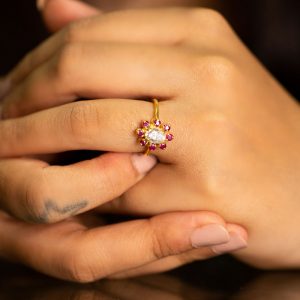
Adore the planet as much your fiancée? Declare your love with a lab-grown diamond solitaire. These sparklers mimic the natural process of diamond growth – over billions of years under extreme pressure and heat in the crust of the Earth – in a laboratory. Not only are they excellent value for money (at a price 10-30% less than natural diamonds) and offer the same durability as ‘real’ diamonds but they’re ‘cleaner’, minus the environmental damage and human conflict associated with mining. A recent study reported that mining diamonds produces 4,383 times more waste than manufactured gems, uses 6.8 times as much water, and consumes 2.14 times the energy per carat produced. How’s that for low impact dazzle!
The Dazzler Next Door
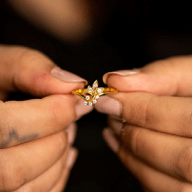
Real diamonds aren’t the blood-soaked villains that they’re made out to be! While mining is historically problematic, there is a conscious move towards accountability (Members of the decade-old United Nations-mandated Kimberley Process Certification Scheme produce about 99.8% of the rough diamonds worldwide.) Lab-made diamonds aren’t 100% clean either. In your enthusiasm to embrace sustainability, try to avoid being greenwashed by companies pushing dubious ‘clean’ and ‘ethical’ labels. Stay vigilant and conscious, but don’t be rigid (or plain illogical!) While you can insist on traceability certificates for natural diamonds, there are other… simpler ways to ensure that your engagement ring doesn’t come with a huge carbon footprint. One of the easiest is to head to your neighbourhood jeweller and have it handcrafted – usually from recycled gold – instead of choosing from a large inventory of machine-made rings.
The Pre-loved Beauty
Vintage is all the rage amongst eco-conscious lovers. You can get the diamonds from your grandmother’s ring re-set into a modern band for your fiancée, or refresh a heirloom setting with a new gemstone. Re-using precious metal (gold) and sturdy gemstones like diamonds, rubies and sapphires (emeralds fall lower on the Moh’s Hardness Scale, so get a skilled jeweller to appraise any vintage ones you plan to revive) is a fantastic way to substantially diminish the carbon footprint of your engagement ring and while raising it on the sentimentality and ethics scales.
The Colourful Star
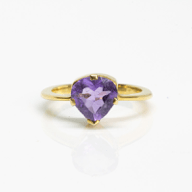
As an eco-conscious consumer, you may want to consider coloured gemstones over diamonds. Both (diamond and gemstone) mining industries are stepping up on newer, sustainable methods of mining with transparent supply chains. But if you opt for unusual gemstones, chances are it originated at an artisanal mine with lesser environmental degradation and worker exploitation (80% of coloured gems are mined at a smaller scale originate in comparison to diamond mining which is 85% industrialized). So when shopping for a ring for your better half, consider the beauty of amethysts, Muzo emeralds, Australian Opals and sustainably-mined pearls.
In Conversation with THRIVIKRAM G NIKAM — The Amrut Fame
Hear THRIVIKRAM as he talks about the current Indian whisky scene which is having the moment. Amrut Fusion has won World Whiskies Awards in 2019 and is made with a combination of Indian barley and peated barley inspired by Scotch. From novices to seasoned whisky drinkers across the globe, eyes are on these single malts and whiskies coming out of India. Flavour, aroma, and structure abound in Amrut—Learn from the guy behind how to savour the best flavours of Indian whisky.
Plant-based Food – Raising the bar of Sustainability
MINIMALIST ACCESSORIES THAT’LL TURN YOU INTO A JEWELLERY PERSON
Minimalists are actual extravagant …. As they wear their mind!!!
Often Minimalists are considered to be one with less, and Maximalists are considered abundant. I am like a bridge between the two so I can give you my perspective of both the lifestyles when it comes to jewelry and what the awakened Gen Z is thinking.
 Search the most expensive jewelry in the world, the number 1 listing is The Pink Star, $71.2 million pink star diamond SOTHEBY’S, Sotheby’s Hong Kong, April 2017. Oh, I was thinking it should have been a 100 kg gold set with 50 carat plus white diamond solitaires on it. So that’s where the thinking differs for Minimalists over Maximalists. Though I went too far to give a purview, not all minimalists are billionaires but they think rich, less is more, quality over quantity, and thus shows traits of alpha. I have a different perspective on sustainability when it comes to jewelry I am a firm believer in all things natural, and ethically sourced to the possibilities. Wear small but wear real is my ideology.
Minimalist jewelry is all the rage for those looking to add subtle pieces to their jewelry collection. By wearing minimalist jewelry, you can add a classic touch of style to your overall look that is sophisticated and elegant; yet cliché. It’s more like wearing your mind … Versatility, as is the notion that the jewelry we wear should be an extension of who we are.
Keeping it simple, basic, and minimal – who would have thought this could be a whole another jewelry trend? Well, but the good part is, it has! And, how wonderfully it has fit into the lifestyle of today’s on-the-go women. After turning a blind eye towards this eternal trend through the experimental and evolving years we have finally realized that the minimal jewelry trend is the one that should have never been away from our sights. Modularity, Werability, and little mechanics takes it to next level.
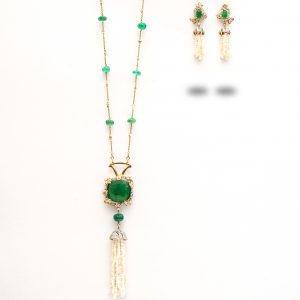
Just a few years ago it made a visible comeback and in no time it transited from appearing sporadically to becoming a MUST-HAVE! Now that it is here to stay.
Whether delicate and understated or bold and geometric, minimalist fine jewelry has never been more in tune with the times.
Minimalism has come to be associated with ease and effortlessness, a more casual, clutter-free lifestyle, all aspired to in this pandemic era. Minimalist jewelry can be those dainty pendant sets, brooches, hairpins, trinkets, bracelets, stack rings, studs, earrings, anklets, nose pins, piercings, nail rings, etc., in this segment also there are mass-produced pieces, office wears, little statement-making and the “extravaganza “
Importance of digital ethics in precision health
Health
Global Market
The Precision Medicine market is estimated to grow at impressive rates over the next decade. According to a recent report published by Marketwatch the precision medicine market value is estimated at $140.69B and is expected to grow at an 11.5% CAGR by 2030.
Definition
Precision medicine and precision health are relatively novel approaches that aim to redefine the way we diagnose, treat, and prevent disease. It has also evolved at an exponential pace over the last few years and fueled the development of a personalized care approach. This growth has been powered by several complex factors. Some of the main ones are advances in technology, an increasingly aging population with a higher incidence of cancers, increased use of big data, as well as scientific knowledge derived from panomics.
Panomics is currently considered one of the major drivers of innovation in healthcare and encompasses genomics, proteomics, metabolomics, transcriptomics, etc.
Genomics is one of the most significant precision medicine drivers and is considered by many experts as the one with the most disruptive potential in healthcare. The cost for next-generation sequencing techniques has decreased from $100,000 to less than $500 over the last decade, while speed and accuracy have increased. Next-generation sequencing has already become a paradigm-changing solution in our quest to move from an industry based on “sick care” toward a preventive, wellness-focused approach.
We now witness a comprehensive emphasis on all domains within precision health, which encompass wellness, longevity, disease monitoring, disease prevention, disease diagnosis, acute disease treatment, chronic disease management, etc.
The Power of Converging Technologies
The current digital era is marked by a complex array of technologies and novel ones being developed at an astonishing pace. Regardless of the source reviewed, some technologies are consistently high-ranked and considered to have high disruptive potential in the current healthcare industry such as Genomics, AI, Blockchain, Robotics, 3D, AR, VR, XR, Bio-Implants, Nanotechnology, Brain-Computer Interfaces, Bio-Implants, and others.
When evaluating each one of these, it is important to consider multiple complex factors such as privacy, security, scalability, cost, safety, and more importantly their impact on population health. The combined deployment of these novel technologies has an augmenting effect and can accelerate our research and development efforts, while at the same time triggering heightened ethics concerns.
The Need for Digital Ethics
We have a moral obligation to ensure privacy, greater transparency, enhanced security, improved traceability, increased efficiency, and exploitability.
Leveraging the full capabilities of all novel technologies in precision health could also serve as the foundation for developing global databases and data exchanges that could spark further preclinical, clinical and translational research, and act as a driver for continuously optimizing population health. However, those can also further increase the complexity of governance, regulatory and legal guidelines that must be drafted by key decision-makers.
To be successful we will have to achieve a larger collaboration and cooperation among all relevant stakeholders, revise our outdated laws and regulatory guidelines to match the latest scientific and technological advances, as well as solve some of the remaining barriers to large-scale technology deployments in healthcare.
Ethics has been a very important discipline for centuries. After decades of marginalization, we are witnessing a resurgence within the scientific and business community due to the complex ethical issues we are facing due to a high degree of automation and augmented intelligence infused in our daily activities, as well as the global business ecosystem. The scientific and business communities, and numerous not-for-profit- and government agencies are all appropriately concerned about ethical issues unique to a digital healthcare ecosystem, with topics like algorithmic bias, social determinants discrimination, data privacy, data ownership, AI transparency, and trust making the headlines daily.
Reactive or mitigation approaches are not an optimal solution and one would hope that ethical leadership in this era of digital healthcare will be defined by state-of-the-art strategic planning, complemented by a revision of our medical education system and a profound transformation of our current healthcare delivery system.
Building a Culture of Ethics
The digital era has changed how our society establishes and verifies trust. Healthcare organizations can create digital trust by designing and implementing comprehensive digital ethics programs and building a lasting culture of digital ethics.
In the post-pandemic era, digital health has become a strong driver of the global economy, however, it is also plagued by a significant trust gap. Only by collaborating towards creating a more responsible data governance framework globally can we achieve sustainable societal trust in tech-driven healthcare models such as virtual, digital, or precision health.
Given the prominent role, genomics plays in precision medicine and the devastating impact privacy breaches can have on our society, there is an opportunity for these precision health leaders to establish themselves as leaders in the digital ethics ecosystem. They can drive the creation and enforce adherence to global digital ethics standards, best practices, and customized digital ethics KPIs.
Forward-looking companies will need to embrace a greater sense of purpose with emphasis on population health, personalized care, and human-centric design for patients and providers will ensure long-term success. C-Suite leaders need to adapt and transform their organizations from an ROI-centered mission to meet the needs of this dynamic healthcare ecosystem. Their strategic mindset has to shift from “ sick-care” to “ well care” and they will have to be purposefully disruptive to maintain their competitive advantage.
Future Directions
The precision health and digital health ecosystems are intertwined and will facilitate the transition towards a personalized care approach to optimize global population health.
Future generations will likely benefit from digital health twins, smart hospitals, smart pharmacies, smart laboratories, and smart imaging centers, however, they will also expect an ethically-driven global precision health ecosystem.
The future of precision health will likely be influenced by building and maintaining a state-of-the-art culture of ethics that would be continuously optimized to adapt to the demands of an exponential medicine era, such as ultra-rapid advancements and deployments of new technologies or a constant influx of disruptors entering the global healthcare ecosystem.
Your Guidebook to “Experiential Events”
Why should you be drinking Organic Wine
#purity #biodiversity #nature #joy … just naming a few words that came up most when talking about “organic wine” at the interview I did with wine lovers, producers, and wine professionals at Europe´s biggest organic wine fair “Millesime Bio”. Another powerful word that encompasses the philosophy behind organic wines is #respect- for the environment, for our health, and for the producers that believe in sustainability as a fundamental pillar for future winemaking.
Same as in organic agriculture of fruits or vegetables, in organic viticulture, it is not permitted the use of pesticides, herbicides, or artificial fertilizers. The winemakers, who choose to work organic, are making an extra effort to use alternative treatments in the vineyards, such as copper against fungus diseases or sexual confusion against unwanted insects. The result? The Earth says a big “Thank you”! The soil, the microorganisms inside it, and the biodiversity around can flourish, and the local waters do not get polluted with the chemicals drained after the rain. In addition, sustainable viticulture aids in preventing climate change as organically farmed soil sequesters more SO2 than conventionally farmed.
Organic wines not only come from organically grown grapes but also are free from artificial additives in the winemaking process. Unfortunately, big players in the wine industry are treating wine as a soda drink recipe and in order to mask unwanted flavors from unhealthy grapes, uneven maturity, lack of acidity or tannins, they can use the powder for color, aromas, and flavor to make sure wine tastes the same vintage after vintage. This doesn´t happen with organic wines as no chemicals or GMOs are allowed, and the restrictions on the additives are applied so the essence of the grape variety, terroir, and the vintage is present. Moreover, the amount of sulfites is restricted in organically certified wines, eg. up to 100mg/l for red wine in Europe (most wineries actually use much less), and only necessary to prevent travel spoilage so that our friends in Tokyo can enjoy wines in the same condition we have them in Barcelona.

As the saying goes, you are what you eat (and drink). Apart from peace of mind knowing that no chemicals went into your glass, by choosing organic wines we make most of the benefits wine adds to our health (not saying it doesn´t have the downside of still being an alcohol) and activation of ‘longevity gene’. According to the research, the levels of the whole-body antioxidant resveratrol, found in the skins, stems, and seeds of red wines, are 30 % higher in organic than in conventional wines!
Organic sounds more expensive? The difference between organic wine prices is minimum (at least in Spain) and on top, you save on these rejuvenation vitamins J. And in case there´s an extra dollar to put, you should feel good about it. Instead of paying for the brands to cover their marketing expenses and supporting the chemical industry, your dollar supports the biodiversity of the vineyards, cleaner environment, water quality, and employment (eg. French organic vineyards employ double the people than conventional vineyards due to more manual work required).
Interesting fact: many of the most famous wineries in the world produce their wines following sustainable practices, even though they do not advertise. Because for them it is not the marketing tool, but the philosophy they sincerely believe in, and long ago have realized that omitting chemicals is beneficial for the quality of the grapes and the general health of the vineyards. Did you know that Domaine de la Romanée Conti, legendary and one of the most prestigious wineries in the world, is certified organic?
French organic champagne maker gave a beautiful reflection with which I´m totally in line with: “Apart from that we should do anything that reduces the impact on the environment, the essential reason for me, as a wine lover, to drink organic wines is that many times the wines made with extra care and by placing the nature in the center of the process, have more to give, have more emotion and transmit something extra into the glass. It is as if nature expresses itself better and deeper through organic wines.”
I hope one day we will be able to say “Organic is a New Normal”. Right now it is definitely the #wisechoice knowing that each time you choose a wine bottle with a green leaf on it, you add a little (but essential) grain of sand towards love for our planet, care for our well-being, and the positive change we want to see in the world, and which comes from our every day (and every wine dinner) choices.
How to get comfortable on Camera while filming a Food Vlog
Fundamentally, what does a food Blogger/vlogger do? A food Blogger/vlogger eats!
Food as we know it is a gateway to the soul. Like water, it’s something that our body and mind need. It comes in different forms, different opinions, different cultures, and different beliefs, but it is something we cannot do without.
Food ironically is a fascinating subject globally. And its dynamics are a bit farfetched. Although the 21st century, we still have the primitive tribal in the heart of Kenya that drink the warm blood of their kill, to the tribal in the amazon that forges the forest for 3 straight days to find bush meat, to a 5 Michelin star restaurant in NYC, they all have one thing in common, the culture that we have grown up in and that reflects on what comes on our plates.
Food is not just an art, it’s not just a science, it’s a lifestyle, and important for all of us to have a basic idea of what goes on around us on the globe we live in reflected through the food that we eat.
Let’s face it, like sex, food is often taboo as well. I mean, how many of us can eat a rotten 4-day old bush meat like the tribal in the amazon, or have dog meat in some provinces in China, or have the fresh pig blood delicacy in Vietnam?
Not many of us. We, simply put, do not have the mindset and the stomach for it, but it’s important for us to know what is going on where we live. Here education suddenly plays an important role across all age groups, genders, nationalities, and races.
This can be achieved via elaborated but interesting content.
People love to know about the unique cuisines of the street food in Thailand, to the diversity of the taste in the Indian Cuisine, to the gut-wrenching weird food in the back ally markets in China, to the multinational cuisines in the food courts, and to the high end $500 per plate Michelin restaurants.
Although we have segregation in Non-vegetarian, vegetarian, and vegan in our fellow citizens of the world – they all still have a sense of curiosity. This very golden tool within the human mind, paths ways for multiple bloggers and vloggers who have it within them, to put across fascinating content for the people.
Equipped with just a mobile phone, one can begin this journey and make it as natural as possible. The food blogging life begins within the 1km radius of where we live and we gradually extend the geographies once we have a certain established formula for the food blogs, we begin traveling and exploring more.
With the help of Youtube, Instagram, and Facebook – there are so many people who live through knowledge that can be touched and influenced.
Ironically, a seasoned Blogger/vlogger also knows that local businesses (eateries, restaurants, QSR, etc) can also be impacted via the Blogger/vlogger, consistently and comprehensively. That’s why many of us now adapt the #vocalforlocal
With the current race of hardware for a better consumer experience, we will soon have the market flooded with cheap mobiles and cameras that will make things so much easier for the Blogger/vlogger than it was, let’s say two years ago.
Lastly, how is a food blogger/vlogger wired?
You can’t be disgusted, but, opinionated you can be.
You can have boundaries but not conditions.
The real tough part here is that if you have any emotions about what you eat, it will show on your face and that can piss people off or ruin your shot.
Hence, comfort for a food vlogger begins on the plate.
Then it’s the team. You have to have great chemistry with the person behind the camera. They often give you exactly what you need when you are yourself. You look straight into the camera with arrow focus on the lens and what you say. That’s it.
Much love and more food power to you.