


I AM TAXONOMY PAGE
Chapter: India
What are the things to consider for private charter ?
Heels on Wheels: Breaking the gender stereotypes
Hacks to Restore Vintage Cars to their Former Glory
Matter of Survival : Grow or Sustain
Grow or sustain?
One of the biggest dilemmas for all the organizations in the current year has been the balance to focus between growth & sustenance. While the pandemic resulted in outraging opportunities in the knowledge industry, the same year also counted for circumstances like the Great Resignation. The ripple effects were also witnessed in the connected industries like automobile, real estate, etc as the spending ability spiked disproportionately. Also, the shortage of quality manufactured products due to the shut down in the previous year further created a gap in the demand-supply chain.
Two paradigm shifts in last year – first the organizations trying to curtail the cost to secure margins and consequently downsizing. A so-called recession at the start of a pandemic or we should say an effort to predict with a pessimist view led to the fright of recession. However, towards the end of FY 21, an absolutely reverse effect started influencing the market which was unprecedented. Unlike the pessimistic view, this was growth. While the futurist predicted recessions after every decade, the same played an important role as the masters were waiting for it since 2018.
The most interesting events that took place during the last two years:
- The strategy of employee focus:
This was a radical change as Trust between the employee & employer became the most important factor for delivery. The traditional approach of monitoring working hours was broken in the blink of an eye. Now the trust has to be redeployed which resulted in failure for taskmasters and reverse stress was generated. Initially due to balancing the work-life with less workforce to secure margins and later due to gap created by longer recruitment cycles as competition brought in enormous challenges. The only successful leaders from this era were the ones who demonstrated a high level of resilience and who could think of new ways to inspire people. Pragmatically, the intimidating leadership demised and the inspiring leadership could sustain. One more key distinguishing factor of the good leaders in this era was also multi-tasking. The leaders who could clearly make business predictable amidst both the chaos. One by planning more and second by preparing the teams for the upcoming times by understanding the pointers to bring unprecedented scenarios under the remit of predictability. They were firm on that one age-old basic – Predictability is proportionate to sustainability
2. Parity and cost arbitrage:
One of the most difficult task in the last two years for entrepreneurs and intrapreneurs were to balance the internal parity Vs the cost arbitrage. While the sound of it says that it should have impacted only the outsourcing industry, however when one thin sliced the situation, its influence is observed on every business owner. While the leaders in the west wanted to outsource more to ensure faster recovery due to pandemics, the leaders in the East were struggling with the rise of direct cost impact due to competition. I’m sure that we have answered questions on this either in front of the CXOs or the board of directors. Here I could observe a very contradictory proposition here. While all the leaders were pessimistic about the circumstances, the positioning was always optimistic. Few examples are like comparing the nos with pre-pandemic and saying we are almost there and recovery will be faster here onwards, SG&A cost has been increased for now for better focus on governance which can be curtailed as we go back to the office, etc
In short, all the questions had a pessimistic approach, and the answers had an optimistic tone. While this is the common tactic in all complicated board meetings to ground-level reviews, what’s intriguing was everyone knew the market scenarios which were challenging and most often termed as unprecedented. These challenges were location agnostic and business agnostic as the world went through it simultaneously with a minor lag from country to country.
I remember that when the lockdowns started in India, Ratan Tata was the only business leader who demonstrated optimism while the other generated hue and cry. He was the one emphasizing taking care of people in losses and they will help you to retrieve success stories once they understand how the organization has sustained through difficult times. Today, on one hand, corporate houses want to grab the growth opportunities which are available in abundance and on the other hand regret the retrenchments and conservative approach taken during the first phase of pandemic
This underscores an important point that while investing one must identify the price of success – volatility & loss amid the long backdrop of growth and be willing to pay it!
73 Questions with Thrivikram G Nikam
Enabling circular economy through waste management
Waste collection and management are among fundamental services which ensure the healthy well-being of society. Today, the rate of waste generation exceeds the nation’s growth in waste management services, posing a threat to people and the environment. One can easily notice dumping of waste being practiced in any city’s outskirts or burning of the same on roadsides, indicating lack of awareness and sensitivity towards right waste practices, posing several challenges. Waste has the potential to become a resource. When not segregated and processed right, it can lose its value. This is the gap that NEPRA has identified and has decided to eliminate through innovative models enabling a circular economy.
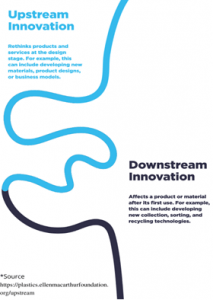
To achieve a circular economy, two types of innovations are crucial.
First, Upstream Innovation, rethinks the problem at its source stage thus, designing models, services, and products at the initial stage.
Second, Downstream Innovation addresses the problem that affects the product or material after its first use.
Waste management in India is largely moved by the informal sector, i.e. people belonging to the Bottom of the Economic Pyramid (BoEP) communities. Waste in the country is majorly hand-sorted, which is not only time-consuming and labor-intensive but also is hazardous to health. With the rising quantum of waste, only relying on this method is proving to be inefficient. NEPRA’s model helps solve these challenges. An inclusive model in its true sense, it caters to the needs of all formal and informal stakeholders of the waste management sector, making it efficient. The cities in which NEPRA works are an example of the impact it makes by bringing government, waste pickers, commercial establishments, industries, and citizens on one platform. Taking the upstream innovation approach, NEPRA has rethought its model and has inculcated an inclusive stakeholder approach benefiting all, and monitoring the system through an Enterprise Resource Platform (ERP). This has enabled the system to become more transparent and accommodate fair transactions. Addressing another source of the problem, NEPRA conducts awareness activities in which people are sensitized about the benefits of proper waste management on society, the environment, and the economy.
Downstream innovation as defined by the Ellen McArthur Foundation, “affects a product or material after its first use. For e.g., this can include developing the new collection, sorting and recycling technologies”. NEPRA’s Material Recovery Facility (MRF) is a vital infrastructural development that promotes sustainable practices and a circular economy. MRFs are the centers where collected waste material is sorted into different types (e.g. plastics, paper, metals, glass, etc.) and is processed in such a way that it maximizes waste recovery and eliminates the scope of dumping of waste. NEPRA’s automated MRFs have been innovatively designed having home-developed and imported machinery. Waste at the MRF is sorted using magnetic belts, conveyors, ballistic separators, air classifiers, and AI-powered pneumatic sorters among many others with manual interventions for quality check. The introduction of robotics at the MRFs has increased its efficiency. Automatic sorting using machine vision systems based on machine learning and artificial intelligence has enabled sorting designated material from the belt of mixed dry waste and guiding it into their respective silos. Sorted waste is then generated into two streams- recyclables and non-recyclables. The waste is auto baled/ shredded/ grinded depending on its nature. The recyclable final product is sent to respective authorized recyclers and the non-recyclables are sent as Refuse Derived Fuel (RDF) to cement plants or waste to energy plants for energy recovery. Thus, having created a value chain for different waste streams, closing the loop to ensure circularity.
The impact of NEPRA’s model is 3-way, socio-economic, and environmental in nature. To mention a few, socially, NEPRA has helped uplift the BoEP community through collecting waste directly from them and engaging them at the MRF as formal employment. Environmentally, NEPRA has helped mitigate tons of GHG emissions through the right waste processing and curbing, dumping, and burning of waste. Lastly, economically, it has promoted circularity, reducing the burden on raw material, making the sector more efficient, and has also helped to generate green jobs. For brief understanding, one can align NEPRA’s impact to the United Nations Sustainable Development Goals (SDGs).
The diagram below lists the goals NEPRA meets, aligned with the 3Ps of People, Planet, and Prosperity.
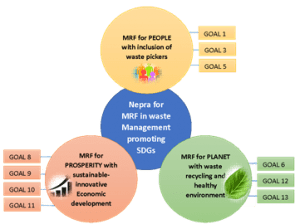
At present NEPRA has its MRFs in 4 cities- Ahmedabad, Pune, Jamnagar, and Indore with a capacity of processing 560 Metric Tons of Dry Waste per day. By 2025, NEPRA’s goal is to have 25 MRFs in 25 major cities of the country.
To know more about NEPRA, visit: www.letsrecycle.in.
The need to re-invent Cybersecurity at the Enterprise level
Security, OR as the latest avatar “Cybersecurity” has always been around. Since the earliest onset of battles, area-capturing; adding defence to existing positions has been practised. All the strategies around the defence of the country have percolated to the defence of the organization and the individual as well. The complexities, budgets, interests of attackers vary, the fundamentals remain the same. Defence, Protection, Cybersecurity keep changing avatars, and therefore the need to always re-invent and stay current.
The keyword here is Re-Invent. It is not a new Invention OR Transformation OR in the more popular form – Innovation. Sure, everything can pass as an Innovation; and that is how the industry is. There are risk patterns and profiles which make us orient ourselves and also re-invent. Let us examine the push triggers which are forcing us to Re-Invent and Re-Think.
- Hazy perimeter borders: We have operated organizations with perimeters and borders. These are comforts and allow for Access Control and Firewalls to be able to control the WWWW (Who, Why, What, When). Add to this Intrusion Prevention and Detection systems that allow us to monitor. With the advent of Work from Anywhere and people preferring flexibility, the perimeter profile has changed. The Cybersecurity space needs to re-invent the controls to focus on WWWW on data and not the perimeter. The latest legislation and controls all focus on country borders, and some data are not allowed to travel beyond borders. Therefore, perimeter controls now need to focus on data travelling around.
- Privacy – the updated beast:: The passing of GDPR heralded a new era in Privacy compliance. Gone were the days when you could try to put this down to just a security breach. A privacy violation today is much more magnified than a cybersecurity breach. Data leaked OR stolen (even if by error) and containing Personal Identifiable Information can bring the organization down in the public media and a stout penalty. GDPR caps penalty at about 4% of the organization’s global turnover; which is pretty hefty by itself. There are now additional ecosystems that are impacting business, e.g. Facebook admitting to incurring a loss due to Apple’s privacy ecosystem changes (the Application Tracking Transparency framework). Add to this the various laws coming up in each country, and the addition is a lot for global and local businesses. A Re-Invent into the way Cybersecurity looks at the definition of critical data and adding PII at the top of the list is required.
- Early warnings and Orchestration: The cybersecurity monitoring technologies focused on their ability to evaluate and provide forensic support in the aftermath of an attack. As we moved forward, organizations have re-invented the products to analyse attack patterns and trigger alerts as early as possible on likely attacks happening. The focus now is on the prevention of attacks, and therefore there are more patterns being evaluated, learnt and is moving to a more proactive culture. Human Learning and Machine Learning are fast becoming increasingly required commodities to ensure there is enough intelligence being built into the systems. These systems, however, finally rely on people to analyse, interpret and then repel the attack. Considering an average organization gets attacked (seriously, that is) at least once a day, it is tough to manage. Orchestration, and building an effectively repel playbook is where Cybersecurity needs to Re-Invent and focus its energies.
In summary, Cybersecurity should look at the fundamentals (these do not change) and Re-Invent to ensure they are adapting to the challenges coming up. The challenges are Hazy Perimeter Borders, Privacy – the Updated Beast, Early warnings and Orchestration. Managing risks and threats around the areas mentioned will go a long way in putting together a roadmap for Cybersecurity. This will take the path of going from Reactive to Proactive (for a longer period of time) to eventually Learning and being in Offense mode when attacked.
How to spark your passion for writing and start a blog with no prior expertise
TOP 5 DRINKING DESTINATIONS TO EXPLORE IN 2022
Traveling is all about experiences. Most of which revolve around wining and dining in exotic locales while exploring exciting new destinations. If you take your tipple seriously, are curious about the country of origin of that Cabernet Sauvignon in your glass, if you find the historical ties between drinks to certain countries fascinating, and scouting for places to visit in 2022, then this can come in handy.
JAPAN
Japan is so much more than cherry blossoms in April and the white mountains in January. The country, the culture, and its food supersede Japan’s influence as a producer of some of the finest beverages such as sake, shochu, awamori, beer, and Japanese whiskies. Japanese food is an art form that can be discovered even in a roadside restaurant in Tokyo. The rich food and drink culture is experienced in Izakaya, Ryokan, and Ryotei. From beer museums to sake breweries, whisky distilleries to wineries, Japan has so much to offer to a thirsty traveler. While enjoying sushi or dining at a traditional Ryotei or having a regular meal at a Yatai food stall you can enjoy sake from a local brewery in Niigata or sip on some delicious shochu in Kagoshima. Or take a train ride to the Hakushu distillery in the outskirts of Tokyo to gain an insight into the world of one of the finest Japanese whiskies.

IRELAND
If your bucket list involves an adventurous whisky trail, then Ireland is the perfect place. The Irish whiskey industry might be smaller than its Scottish counterpart, but it’s nowhere less exciting. Some of the best whiskey trails and distillery tours organized here can offer you the experience of a lifetime. The island country has 60 distilleries, most of which are operational and fully open to curating bespoke itineraries involving guided tastings to authentic experiences suitable for regular travelers as well as whisky connoisseurs.

MEXICO
The magic and mystery of Mexico are beyond Aztec ruins and Frida Kahlo. It is also the country that produces some of the best artisanal spirits in the world. Drinks such as Tequila, Mezcal, Raicilla, Sotol, Bacanora, and Pulque are traditional drinks with a deep-rooted connection to the culture of Mexico.
The best way to discover Mexico is not just to add Cancun, Mayan Riviera, and Puerto Vallarta to the itinerary, but also to explore Oaxaca (for Mezcal) and Jalisco (for tequila). From vineyards in Northern Mexico to artisanal Mezcal distilleries in the South (Oaxaca), the country has so much to offer to satiate the curiosity of offbeat travelers.

ITALY
Italy is a wine lover’s paradise. From the crisp and delightful white wines and Prosecco from the Northern region, the classic Chianti Classico, Brunello di Montalcino, and Vernaccia di San Gimignano in Tuscany at the center and volcanic wines from Sicily in the south, Italy as an old-world wine-producing region have a wine for every kind of wine lover.
Next time you think of visiting Italy keep the wine map ready to experience some of the best vino tourism experiences in Tuscany, Veneto region, Catania, or near Palermo city in Sicily that provides the most authentic, tailored, guided tastings, visits as well as stay options.

SOUTH KOREA
Did you know that the growing popularity of Korean culture through K-pop, K-dramas, and K-beauty is directly proportional to the sales of the world’s best-selling spirits brand Jinro soju? Well, that may not be the truth, but if every time you took a sip of soju when you saw a bottle of soju in any of the Korean dramas or saw someone eating kimchi, this might come true. Seoul, Busan, Ulsan, Jeju Island, Daegu, the breathtaking beauty of these South Korean cities are attracting many international tourists. However, more than just the locations, it’s the friendly culture of the country that offers the traveler to ‘imagine your Korea’ by allowing you to become a character in the kingdom during a palace tour or help you look for your favorite k-pop star during the Gangnam k-pop tour. You can also explore the world of soju through tours to traditional soju distilleries, learn the distillation process with a soju master, learn the history and culture of the drink, pair Korean food with soju, and learn how to make interesting soju cocktails.

(Rojita Tiwari is an acclaimed beverage writer, educator & consultant. She is the Founder of Drinks & Destinations and a certified jury member of several international wine and spirits competitions. She can be reached at drinksanddestinations@gmail.com)