


I AM TAXONOMY BUSINESS PAGE
YES I AM A DLC_COMMITTEE TAX PAGE
I AM ON BUSINESS LEVEL
I AM ON BUSINESS LEVEL
Committee: Business
Comprehensive Business Knowledge designed to help you with your strategic, tactical and daily business decisions.
Implementation of RPAs (Robotic Automation Process) & its Benefits
Matter of Survival : Grow or Sustain
Grow or sustain?
One of the biggest dilemmas for all the organizations in the current year has been the balance to focus between growth & sustenance. While the pandemic resulted in outraging opportunities in the knowledge industry, the same year also counted for circumstances like the Great Resignation. The ripple effects were also witnessed in the connected industries like automobile, real estate, etc as the spending ability spiked disproportionately. Also, the shortage of quality manufactured products due to the shut down in the previous year further created a gap in the demand-supply chain.
Two paradigm shifts in last year – first the organizations trying to curtail the cost to secure margins and consequently downsizing. A so-called recession at the start of a pandemic or we should say an effort to predict with a pessimist view led to the fright of recession. However, towards the end of FY 21, an absolutely reverse effect started influencing the market which was unprecedented. Unlike the pessimistic view, this was growth. While the futurist predicted recessions after every decade, the same played an important role as the masters were waiting for it since 2018.
The most interesting events that took place during the last two years:
- The strategy of employee focus:
This was a radical change as Trust between the employee & employer became the most important factor for delivery. The traditional approach of monitoring working hours was broken in the blink of an eye. Now the trust has to be redeployed which resulted in failure for taskmasters and reverse stress was generated. Initially due to balancing the work-life with less workforce to secure margins and later due to gap created by longer recruitment cycles as competition brought in enormous challenges. The only successful leaders from this era were the ones who demonstrated a high level of resilience and who could think of new ways to inspire people. Pragmatically, the intimidating leadership demised and the inspiring leadership could sustain. One more key distinguishing factor of the good leaders in this era was also multi-tasking. The leaders who could clearly make business predictable amidst both the chaos. One by planning more and second by preparing the teams for the upcoming times by understanding the pointers to bring unprecedented scenarios under the remit of predictability. They were firm on that one age-old basic – Predictability is proportionate to sustainability
2. Parity and cost arbitrage:
One of the most difficult task in the last two years for entrepreneurs and intrapreneurs were to balance the internal parity Vs the cost arbitrage. While the sound of it says that it should have impacted only the outsourcing industry, however when one thin sliced the situation, its influence is observed on every business owner. While the leaders in the west wanted to outsource more to ensure faster recovery due to pandemics, the leaders in the East were struggling with the rise of direct cost impact due to competition. I’m sure that we have answered questions on this either in front of the CXOs or the board of directors. Here I could observe a very contradictory proposition here. While all the leaders were pessimistic about the circumstances, the positioning was always optimistic. Few examples are like comparing the nos with pre-pandemic and saying we are almost there and recovery will be faster here onwards, SG&A cost has been increased for now for better focus on governance which can be curtailed as we go back to the office, etc
In short, all the questions had a pessimistic approach, and the answers had an optimistic tone. While this is the common tactic in all complicated board meetings to ground-level reviews, what’s intriguing was everyone knew the market scenarios which were challenging and most often termed as unprecedented. These challenges were location agnostic and business agnostic as the world went through it simultaneously with a minor lag from country to country.
I remember that when the lockdowns started in India, Ratan Tata was the only business leader who demonstrated optimism while the other generated hue and cry. He was the one emphasizing taking care of people in losses and they will help you to retrieve success stories once they understand how the organization has sustained through difficult times. Today, on one hand, corporate houses want to grab the growth opportunities which are available in abundance and on the other hand regret the retrenchments and conservative approach taken during the first phase of pandemic
This underscores an important point that while investing one must identify the price of success – volatility & loss amid the long backdrop of growth and be willing to pay it!
Enabling circular economy through waste management
Waste collection and management are among fundamental services which ensure the healthy well-being of society. Today, the rate of waste generation exceeds the nation’s growth in waste management services, posing a threat to people and the environment. One can easily notice dumping of waste being practiced in any city’s outskirts or burning of the same on roadsides, indicating lack of awareness and sensitivity towards right waste practices, posing several challenges. Waste has the potential to become a resource. When not segregated and processed right, it can lose its value. This is the gap that NEPRA has identified and has decided to eliminate through innovative models enabling a circular economy.
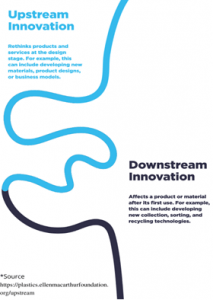
To achieve a circular economy, two types of innovations are crucial.
First, Upstream Innovation, rethinks the problem at its source stage thus, designing models, services, and products at the initial stage.
Second, Downstream Innovation addresses the problem that affects the product or material after its first use.
Waste management in India is largely moved by the informal sector, i.e. people belonging to the Bottom of the Economic Pyramid (BoEP) communities. Waste in the country is majorly hand-sorted, which is not only time-consuming and labor-intensive but also is hazardous to health. With the rising quantum of waste, only relying on this method is proving to be inefficient. NEPRA’s model helps solve these challenges. An inclusive model in its true sense, it caters to the needs of all formal and informal stakeholders of the waste management sector, making it efficient. The cities in which NEPRA works are an example of the impact it makes by bringing government, waste pickers, commercial establishments, industries, and citizens on one platform. Taking the upstream innovation approach, NEPRA has rethought its model and has inculcated an inclusive stakeholder approach benefiting all, and monitoring the system through an Enterprise Resource Platform (ERP). This has enabled the system to become more transparent and accommodate fair transactions. Addressing another source of the problem, NEPRA conducts awareness activities in which people are sensitized about the benefits of proper waste management on society, the environment, and the economy.
Downstream innovation as defined by the Ellen McArthur Foundation, “affects a product or material after its first use. For e.g., this can include developing the new collection, sorting and recycling technologies”. NEPRA’s Material Recovery Facility (MRF) is a vital infrastructural development that promotes sustainable practices and a circular economy. MRFs are the centers where collected waste material is sorted into different types (e.g. plastics, paper, metals, glass, etc.) and is processed in such a way that it maximizes waste recovery and eliminates the scope of dumping of waste. NEPRA’s automated MRFs have been innovatively designed having home-developed and imported machinery. Waste at the MRF is sorted using magnetic belts, conveyors, ballistic separators, air classifiers, and AI-powered pneumatic sorters among many others with manual interventions for quality check. The introduction of robotics at the MRFs has increased its efficiency. Automatic sorting using machine vision systems based on machine learning and artificial intelligence has enabled sorting designated material from the belt of mixed dry waste and guiding it into their respective silos. Sorted waste is then generated into two streams- recyclables and non-recyclables. The waste is auto baled/ shredded/ grinded depending on its nature. The recyclable final product is sent to respective authorized recyclers and the non-recyclables are sent as Refuse Derived Fuel (RDF) to cement plants or waste to energy plants for energy recovery. Thus, having created a value chain for different waste streams, closing the loop to ensure circularity.
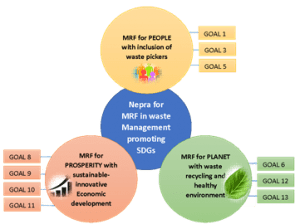
The impact of NEPRA’s model is 3-way, socio-economic, and environmental in nature. To mention a few, socially, NEPRA has helped uplift the BoEP community through collecting waste directly from them and engaging them at the MRF as formal employment. Environmentally, NEPRA has helped mitigate tons of GHG emissions through the right waste processing and curbing, dumping, and burning of waste. Lastly, economically, it has promoted circularity, reducing the burden on raw material, making the sector more efficient, and has also helped to generate green jobs. For brief understanding, one can align NEPRA’s impact to the United Nations Sustainable Development Goals (SDGs).
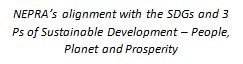
The diagram below lists the goals NEPRA meets, aligned with the 3Ps of People, Planet, and Prosperity.
At present NEPRA has its MRFs in 4 cities- Ahmedabad, Pune, Jamnagar, and Indore with a capacity of processing 560 Metric Tons of Dry Waste per day. By 2025, NEPRA’s goal is to have 25 MRFs in 25 major cities of the country.
To know more about NEPRA, visit: www.letsrecycle.in.
The need to re-invent Cybersecurity at the Enterprise level
Security, OR as the latest avatar “Cybersecurity” has always been around. Since the earliest onset of battles, area-capturing; adding defence to existing positions has been practised. All the strategies around the defence of the country have percolated to the defence of the organization and the individual as well. The complexities, budgets, interests of attackers vary, the fundamentals remain the same. Defence, Protection, Cybersecurity keep changing avatars, and therefore the need to always re-invent and stay current.
The keyword here is Re-Invent. It is not a new Invention OR Transformation OR in the more popular form – Innovation. Sure, everything can pass as an Innovation; and that is how the industry is. There are risk patterns and profiles which make us orient ourselves and also re-invent. Let us examine the push triggers which are forcing us to Re-Invent and Re-Think.
- Hazy perimeter borders: We have operated organizations with perimeters and borders. These are comforts and allow for Access Control and Firewalls to be able to control the WWWW (Who, Why, What, When). Add to this Intrusion Prevention and Detection systems that allow us to monitor. With the advent of Work from Anywhere and people preferring flexibility, the perimeter profile has changed. The Cybersecurity space needs to re-invent the controls to focus on WWWW on data and not the perimeter. The latest legislation and controls all focus on country borders, and some data are not allowed to travel beyond borders. Therefore, perimeter controls now need to focus on data travelling around.
- Privacy – the updated beast:: The passing of GDPR heralded a new era in Privacy compliance. Gone were the days when you could try to put this down to just a security breach. A privacy violation today is much more magnified than a cybersecurity breach. Data leaked OR stolen (even if by error) and containing Personal Identifiable Information can bring the organization down in the public media and a stout penalty. GDPR caps penalty at about 4% of the organization’s global turnover; which is pretty hefty by itself. There are now additional ecosystems that are impacting business, e.g. Facebook admitting to incurring a loss due to Apple’s privacy ecosystem changes (the Application Tracking Transparency framework). Add to this the various laws coming up in each country, and the addition is a lot for global and local businesses. A Re-Invent into the way Cybersecurity looks at the definition of critical data and adding PII at the top of the list is required.
- Early warnings and Orchestration: The cybersecurity monitoring technologies focused on their ability to evaluate and provide forensic support in the aftermath of an attack. As we moved forward, organizations have re-invented the products to analyse attack patterns and trigger alerts as early as possible on likely attacks happening. The focus now is on the prevention of attacks, and therefore there are more patterns being evaluated, learnt and is moving to a more proactive culture. Human Learning and Machine Learning are fast becoming increasingly required commodities to ensure there is enough intelligence being built into the systems. These systems, however, finally rely on people to analyse, interpret and then repel the attack. Considering an average organization gets attacked (seriously, that is) at least once a day, it is tough to manage. Orchestration, and building an effectively repel playbook is where Cybersecurity needs to Re-Invent and focus its energies.
In summary, Cybersecurity should look at the fundamentals (these do not change) and Re-Invent to ensure they are adapting to the challenges coming up. The challenges are Hazy Perimeter Borders, Privacy – the Updated Beast, Early warnings and Orchestration. Managing risks and threats around the areas mentioned will go a long way in putting together a roadmap for Cybersecurity. This will take the path of going from Reactive to Proactive (for a longer period of time) to eventually Learning and being in Offense mode when attacked.
How Employee Volunteer Programs Can Improve Your Company
Encouragement and promotion of employee participation in community programs is one way for businesses to demonstrate their social responsibility. Employer programs that aid and support employees in volunteering, in particular, are gaining popularity. Employee volunteering, also known as corporate volunteering or employer-supported volunteering, allows employees to volunteer in their communities while receiving active support from their employers through both formal and informal policies and initiatives.
Employee Volunteer programs have been proved in numerous studies to promote productivity, employee engagement, and hiring and retention. According to a study published in 2013 by Harvard Business Review, the more employees who volunteered (even if it was on their own time rather than on business time), the better they did on job duties. It was also revealed that volunteers, at work, tended to be better citizens (helping others, voicing ideas, and so on).
Structuring an Effective Employee Volunteer program:
You are sure to come across a variety of corporate volunteer programs. Some companies allow employees to volunteer for a cause or activity of their choice, while others organize highly structured events for teams to participate in together, such as a charity run, etc. Here’s how you can design an EVP that is best suited to your organization.
- Begin with the vision and mission of your company.
Setting up programs that align with your values is an effective method to demonstrate to your shareholders, customers, and employees that you adhere to certain values and that you act on them.
When you’re deciding on your fundamental program concepts, be as open and transparent with your team as possible about why you’re doing it. This will assist in removing any cynicism. Demonstrate to your employees that they can rely on you for assistance in living lives that are driven by a higher purpose.
- Choosing the causes your organization will support.
There are a few ways for determining which cause to support. This can be decided in a top-down hierarchy, with upper management selecting the causes. You might also conduct a survey or speak with your employees to understand the kinds of causes they wish to support or are already supporting. The best approach is usually a mix of the two: you may have certain central campaigns focused on the causes required by upper-level management, while also encouraging your employees to decide what causes they want to support on a local and global level. Either way, make sure you have a clear understanding of why you’re supporting the causes you do.
- Set clear objectives
The key to creating a successful corporate volunteering program is to set clear and quantifiable goals. Consider how your program’s objectives fit into your company’s overall strategy and develop metrics to help you turn these aims into measurable accomplishments.
Keep your resources in mind while you set your goals. Answer questions such as – how much time do you think you’ll be able to devote to this? What is your financial plan? Etc. Implementing a best-in-class corporate volunteering program is a process; you may begin with a few projects and gradually expand your program to include more possibilities for your employees to participate and maximize your effectiveness.
- Find an employee volunteering platform to partner with.
Employee engagement is boosted by an online platform because it allows employees to join in from anywhere and track projects in real-time, even if they work remotely. It makes volunteering easy for your employees by bringing alternatives to them.
Online volunteering offers a lot of advantages such as – your employees can access and browse from a catalog of projects, you can centralize and manage the entire program from one location, and you can track the impact your program is making, and share the results with the entire company to prompt others to come on board. A partner will be able to assist you in identifying appropriate causes that are in line with your company’s beliefs.
The Power of Employee Engagement
A lot has been said and written about what Employee Engagement is, it’s importance and the drivers thereof. In this blog I will not cover that, but rather highlight some of those critical yet often muted insights in many conversations.
Enabling and achieving employee engagement is without doubt key to success on the journey to the desired employee & customer experience. Research shows that there is a very strong link between employee experience and customer experience, which leads to innovation, sustained productivity, a strong brand reputation and growth.
Research also shows that engaged employees are 87% less likely to leave. The Great resignation is becoming a concern for most organization and hence employee engagement remains a priority for most organizations, the question is are we focusing on the things that matter the most? Are we mindful of what it means to be human- how our language, emotions and body provides intelligence that through coaching can help us as individuals and organization produce learning that generates change which ultimately may lead to increased engagement? I mention both individual and organization as they are both jointly responsible for increasing engagement for themselves and others.
From my observation, the dominant narrative seems to be what the organization, the manager, leader (leader with position) can do to improve employee engagement. I believe that it is time to change the narrative. We all know that motivation and commitment is more powerful when it comes from within. Therefore, to create and build an organization of fully engaged people requires the best from all people – it should not only be the responsibility of People Leaders. We are all human beings and our whole being matters, and as such only the individual has control of their personal life and how that can influence work experience and vice versa. As an individual I have a responsibility towards self and others. So, every person should be asking themselves the question – what can I do to engage MYSELF and others, taking into consideration the well-known drivers of engagement and one’s role within the organization.
I would like to share some questions that we need to be asking ourselves. I trust that these will result in learning that generates change which ultimately may lead to increased engagement, if taken seriously and is followed by the right action.
Individual Contributor– Given the VUCA times we are leaving in, how aware are you of what is really going on with you internally? Your wellness is an increasingly important aspect of your experience at work.
How could this (VUCA) be impacting your work experience?
Do you consciously and consistently observe your thoughts and the assessments you are making?
What is important to you that is not being taken care of?
Human beings continually engage in ‘concernful’ activity, everything we do is oriented towards taking care of what matters to us. What concerns are not being met? If these are not addressed, it leads to a ‘breakdown’. As life and Ontological coaching is teaching me, mastery in life is in dealing with breakdowns.
How committed are you to your work, your team, your organization and why? What is the responsible thing to do? An example of ways to make you feel engaged at work, 5 Ideas to Help You Feel More Engaged at Work – Engagement Multiplier.
People Leaders– do you understand the impact of the turbulent times and what the people need the most? What do the choices you make support or negate an engaging workplace?
Do you understand how you are impacting employee engagement and how you plan to impact it positively? Engaged managers and leaders build engaged teams.
How are you contributing to the creation of a culture where people are encouraged to take responsibility for their own engagement? An environment where, people know and feel that first and foremost they are cared for as human beings and are encouraged to learn and grow from their mistakes.
Do you listen, understand and provide clarity on what is required of individuals and teams under your care, support and reward them accordingly?
Do you respect the dignity of others and therefore allow them to think for themselves so they may contribute to both individual and organizational success? Employees empowered and coached to make decisions are more likely to make high impact decision that help move the needle in organizations. Empowerment leads to increased engagement.
Engaged people also ensure that they grow and improve their work consistently helping the organization achieve sustainable innovation and growth, a goal that all serious organizations aspire to achieve.
The power of employee engagement lies within us, and requires all to play our part!
Could Machine Thinking be Limiting your Organization’s Human Potential?
There are many things within our organisations that continue to limit human potential on an on-going basis. We spend hours, months and years working to ‘value our most important asset’ and ‘unleash human potential’. Worthy phrases yet sadly, in many instances, remaining just that, worthy phrases.
We continue to look though the wrong end of the telescope and wonder why we can’t see clearly. Even the phrases themselves grate on those they are meant to inspire. ‘I am not an asset, I am a human being. I don’t need you to unleash my potential, I just need you to get out of my way’. It has been the never-ending story for many decades.
And here we are. At an almost unique point in human history. A moment in time when artificial intelligence increasingly touches all aspects of life, while our everyday existence has been shaken to the core following a global pandemic. Challenging? Certainly. Opportunity? That depends on what we do next and no more so than in the workspace.
For decades we have organised people around work and work practices that hark back to the 18th Century. Practices based on hierarchy, structure, process, and standardisation. All very controllable and all very predictable. Today, Innovation, human networks of collaboration, energy and ideas, are essential for organisations to thrive, bringing forth services and products not yet imagined, yet essential for our collective health and that of the planet.
Machine learning will support and continue to drive progress as intelligent machines develop and learn at an exponential rate, taking over roles and activities once performed by humans. All at a speed and accuracy we humans simply can’t match. Consequently, many existing activities and roles will disappear forcing a sea-change in the way we work and develop as humans.
Machines are programmed to achieve certain objectives, for example, speech recognition or translation. They do not have an IQ and they certainly do not, as yet, benefit from emotional, social or attentional intelligences. We humans have the full range of intelligences and can do many different things alongside rational, logical thought. We are emotional beings, vibrating with creative energy and a deep-seated curiosity. We can mentalise, share ideas and build relationships. We have the potential to excel in areas AI and machine ways of thinking cannot touch.
However, to excel we must harness and practice skills that have largely remained dormant in our post-industrial age world. As we liberate ourselves from repetitive, mundane tasks and learn to manage the complexity of interaction between machine and human, we can take ourselves to new levels of wellbeing, productivity, and innovation.
Successful organisations will be the ones who remain in continuous dialogue, thinking deeply and engaging diverse minds, to design work around their people. Challenging the existing work paradigm, relinquishing control and dispersing autonomy and decision-making accountability across a flexible living system. In this way the structured work environment humans have often been instructed to adapt themselves to, will fall away, leaving a space for latent human potential to flourish.
Could machine thinking be limiting our organisations potential? If we compete and contain our thinking to the logical, linear ways of the past then, yes, not only will we fail to match the speed and power of our algorithm-fuelled co-workers, we will also slowly strangle all aspects of human motivation and creativity. However, if we turn the telescope around, focusing attention and thinking on our uniquely human skills such as empathy, vulnerability, relationship and caring, we have an opportunity to break the boundaries that currently hamper human potential. This collective release of energy and innovation will no doubt reshape how we work, the organisations within which we work and the wider society within which we are all situated. The potential, if we choose to accept the challenge, is limitless.
Sustaining Employee Engagement During This Pandemic
Marna used to think of herself as a team player. She was the one who brought balloons and cake to the office for everyone’s birthdays. She used to make a point to walk around and say hi to every member of the team at least once a day. She was the first to contribute in brainstorming exercises, and often the last to leave the office at night.
Then one day, she was told to stay home. “Work From Home,” they called it. Suddenly remote work was not an exception to the rule, it was the rule. She received an email telling her that if it wasn’t necessary to come to the office, she shouldn’t. Instead, she should work from home.
This was a dramatic change for Marna, who was used to shaking hands with her colleagues every day, setting the bar for energy and enthusiasm in the office, and caring for the social environment of her colleagues. Now she was alone, in an empty apartment, struggling to remain connected and engaged.
There are only so many Zoom calls you can take in a day before the frustration of never being able to make direct eye contact start to wear on you. And pyjamas are so comfortable, and Netflix so accessible, and the refrigerator so close-by. It wasn’t long before Marna’s quality of work started slipping. Instead of charging through her work, she started “getting through the day.”
Months later she was allowed back to the office, only to find that on a day to day basis, dozens of her colleagues were missing due to “close contact” and quarantine restrictions. The office she was so looking forward to returning to had become a ghost town. And since half of the staff was gone, the meetings were still online. And that meant there was still no eye contact. The isolation she felt at home was bad enough. Now, she felt it at the office as well.
It’s a sad fact that the flexibility that comes with remote work is often accompanied by social isolation and disengagement. Many of my clients are struggling with change fatigue and digital burnout among their staff, and they’ve been sharing stories with me about how historically high performers like Marna are finding it hard to remain engaged in the new norm. If that describes you or your team… here are three tips for improving employee engagement during a global pandemic.
1. Flexibility: Encourage your staff that are working remotely to work during times that are conducive for them. With the exception of meetings that they should attend, employees will work better if they can work at their own high functioning times. Some people function better at night, others in the morning. Having that flexibility can help employees stay engaged.
2. Mental Health Checks: Employees won’t tell you if they’re struggling with loneliness, depression, or isolation, so you’ll need to ask. Remember, they’re humans not resources, so they’ll have hard times, and the isolation of an empty apartment and remote work can be mentally draining for people. Humans are social creatures, so make sure to ask about your teammates’ emotional support structure and mental wellbeing.
3. Over-Communicate: Without the break room chitchat and the water-cooler gossip, remote workers are missing out on a lot of the informal information sharing that usually goes on at work. So even though we are still receiving emails and making calls, we might not realise
that the general quality and volume of information goes down considerably when we’re not in the office. As a rule of thumb, you should be checking in on everyone every day, and meeting on video chat at least twice a week.
These quick tips will help employees remain engaged while working from home. Humans haven’t evolved to live and work in isolation from each other. So managers and leaders need to work extra hard to keep remote workers engaged and bonded with their teammates. If you are struggling with managing remote teammates, consider checking out my course Managing Remote Teams here: https://learn.drcorrieblock.com/courses/managing-remote-teams
If you are struggling with your own mental health during a time of quarantine or remote working, remember that what you’re feeling is very human. Reach out to a mental health professional, or send me a message and I’ll try to help.