


I AM TAXONOMY PAGE
Chapter: Indore
Corporate responsibility & Inclusivity towards the Specially Abled
Role of Supply Chain in Agri Tech startups
The Data Center of the Future
What most people don’t understand about chemotherapy
When your oncologist says you need chemotherapy, your dreams may be filled with ambiguous thoughts which may not be actually realistic of what’s involved in chemotherapy sessions. Many of us picture ourselves with IV drip in a hospital bed with a lot many emotions. The realistic thinking is, that there are many ways to get chemotherapy starting from skin cream to the IV drip. Side effects are purely dependant on individuals defence systems which may not be similar for everyone.
Here are some mind-blowing facts about chemotherapy which might surprise you to preparing for a chemotherapy session
- No overnight stay in hospital- Chemotherapy can be given as a daycare procedure at the hospital, office, home etc., which depends upon factors like the type of cancer and type of chemotherapy to be planned, any previous chemotherapy sessions, and any health-related problems.
- Tablets or skin creams- Your oncologist can prescribe chemotherapy in the form of tablets which can be swallowed, dosage depends from daily to weekly once and in form of skin creams which can be rubbed on the skin.
- Kill hidden cancer cells in the blood- Your oncologist may prescribe chemotherapy not only to shrink the tumour before surgery but also to kill the hidden cancer cells which may be in the blood after the surgery is performed to remove the tumour.
- Can perform all daily activities – Chemotherapy isn’t debilitating as you expect. Always have a flexible schedule of chemotherapy sessions to adjust your office timings. Working remotely from home or hospital is always kept as a last option when you don’t feel good after the chemotherapy session.
- Varied side effects- Some patients don’t have any side effects and not every patient has similar ones. Side effects may vary ranging from fatigue to hair loss. You need to talk to your oncologist about the expected side effects though it’s hard to predict which symptoms you will have.
- Side effects lasting for months or years- There can be side effects which may last for years like infertility, kidney problems, nerve damage and chances of getting second cancer.
- Dietary and Lifestyle changes- Eat lots of protein and calorie-rich food whenever you are able to eat. Your appetite may be highest in the morning, so that can be a good time to get in a bigger meal. If solid foods aren’t appealing, try semi-solid, liquid meal replacements for extra calories like fresh fruit juice, soup, or milk. Eat smaller meals five or six times a day instead of three larger ones. This can help keep you from feeling too full.
- Chemotherapy can be used to treat other conditions – Other conditions like bone marrow disease can be treated by chemotherapy.
- Visit your Dentist before the chemotherapy – Chemotherapy not only kills cancer cells but also kills normal cells in your immune system which in turn raises the chances of infections during chemotherapy sessions. To stay away from infections, kindly check whether you have taken flu shots before chemotherapy. Visit your dentist to make sure your oral cavity is clean and oral hygiene is maintained. Wash your hands often and stay away from sick people and pets.
- General Medications can interfere with chemotherapy – Over the counter medications and vitamin, capsules can interfere with chemotherapy sessions. We generally think vitamins are safe to improve the health but high doses of Vitamin A, C and E can interfere with chemotherapy. Consult your oncologist to take any medications.
MINIMALIST ACCESSORIES THAT’LL TURN YOU INTO A JEWELLERY PERSON
Minimalists are actual extravagant …. As they wear their mind!!!
Often Minimalists are considered to be one with less, and Maximalists are considered abundant. I am like a bridge between the two so I can give you my perspective of both the lifestyles when it comes to jewelry and what the awakened Gen Z is thinking.
 Search the most expensive jewelry in the world, the number 1 listing is The Pink Star, $71.2 million pink star diamond SOTHEBY’S, Sotheby’s Hong Kong, April 2017. Oh, I was thinking it should have been a 100 kg gold set with 50 carat plus white diamond solitaires on it. So that’s where the thinking differs for Minimalists over Maximalists. Though I went too far to give a purview, not all minimalists are billionaires but they think rich, less is more, quality over quantity, and thus shows traits of alpha. I have a different perspective on sustainability when it comes to jewelry I am a firm believer in all things natural, and ethically sourced to the possibilities. Wear small but wear real is my ideology.
Minimalist jewelry is all the rage for those looking to add subtle pieces to their jewelry collection. By wearing minimalist jewelry, you can add a classic touch of style to your overall look that is sophisticated and elegant; yet cliché. It’s more like wearing your mind … Versatility, as is the notion that the jewelry we wear should be an extension of who we are.
Keeping it simple, basic, and minimal – who would have thought this could be a whole another jewelry trend? Well, but the good part is, it has! And, how wonderfully it has fit into the lifestyle of today’s on-the-go women. After turning a blind eye towards this eternal trend through the experimental and evolving years we have finally realized that the minimal jewelry trend is the one that should have never been away from our sights. Modularity, Werability, and little mechanics takes it to next level.

Just a few years ago it made a visible comeback and in no time it transited from appearing sporadically to becoming a MUST-HAVE! Now that it is here to stay.
Whether delicate and understated or bold and geometric, minimalist fine jewelry has never been more in tune with the times.
Minimalism has come to be associated with ease and effortlessness, a more casual, clutter-free lifestyle, all aspired to in this pandemic era. Minimalist jewelry can be those dainty pendant sets, brooches, hairpins, trinkets, bracelets, stack rings, studs, earrings, anklets, nose pins, piercings, nail rings, etc., in this segment also there are mass-produced pieces, office wears, little statement-making and the “extravaganza “
How can Design Thinking be used in Public Service Organizations
We are in a time where people are not only talking about Start-up India, Aatma Nirbhar Bharat, Make in India but a lot of action around it to make India a 5trillion economy has already kick-started.
But is it enough to have a dream? An idea? To make any dreams achievable and not only achieve but also achieve at the earliest with minimum cost is equally important. India being a growing country has today identified ample entrepreneurship opportunities.
An opportunity is defined as a potential to create something new and desirable (new products or services, new markets, new production processes, new raw material, new ways of organizing existing technologies, etc.) that has emerged from a complex pattern of changing conditions. And to ensure success in business, one will need to identify an entrepreneurial opportunity that has a market.
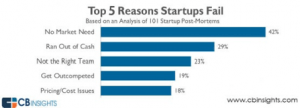
A no. of recent studies has shown that most the start-ups fail due to a LACK OF MARKET NEEDS. (Fig below). And that is where the relevance of DESIGN THINKING comes into effect.
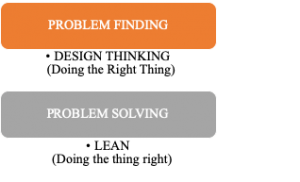
Design Thinking is a design methodology that provides a solution-based approach to solving problems.
It’s extremely useful in tackling complex problems that are ill-defined or unknown, by understanding the human needs involved, by re-framing the problem in human-centric ways, by creating many ideas in brainstorming sessions, and by adopting a hands-on approach in prototyping and testing. (www.interaction-design.org/)
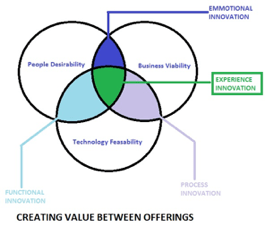 While applying the concept of design thinking into any domain of business, say public service organizations, it is imperative that we keep people at the center and ensure that it creates delight by going above fulfilling their emotional needs.
Making it just convenient by introducing new processes and functionality is generally not enough to ensure your customer keep coming back to you,
EXPERIENCE INNOVATION IS THE KEY.
For any Public service organization, the key challenge is the diversity in its customer segment, which makes the utility of the concept even more desirable. Moreover, the vulnerability of its target audience and the pressure of ensuring the success of the concept make it prudent to apply design thinking.
The easiest five-stage Design Thinking model proposed by the Hasso-Plattner Institute of Design at Stanford (d.school), helps reducing the risk of failure and ensures to give insights that make innovation more market-ready. (Fig below)
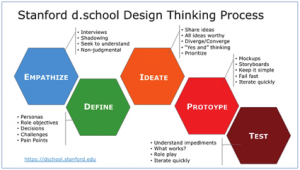
Successful innovations are defined by the intensity of collaborations with the market. It is inevitable to involve and take feedback from direct consumers while developing solutions.
7C’s of Innovation as beautifully devised by team IIT Bombay very well defines the process of Innovation using design thinking. The 7 concerns are- Cause, Context, Comprehension, Check, Conception, Crafting and Connection,
The first 3 steps- Cause, Context, and Comprehension revolve around understanding the Users. (Make efforts to study not only the primary users but Secondary and tertiary as well).
Check is about creating the checklist of the product brief to ensure that the solution promises the asks from the consumer.
Conception and Crafting are about working out on ideas and concepts and finally building prototypes and mock ups of the champion Idea.
And lastly, Connection is all about going back to the customer, taking feedback and continuing the efforts of innovating the Product/Service to ensure relevance in the changing competitive environment.
The methodology of Innovation is changing. The story of taking the product from the lab to the market has been changed to bringing the problems to the labs for successful innovations. The Sustainable Development Goals is an example of such an approach where researchers and innovators are encouraged to pick up a problem, stay close to the beneficiaries and devise solutions that are largely accepted, adopted, and are sure to create impact. For any public service organization where usually the market is big, the inclusion of and continuous intervention by all their possible categories of customer personas while innovating is crucial.
Design Thinking is iterative and the way towards successful innovation and should become a part of the culture of any organization to ensure its sustainability and growth.
IoT in Smart Manufacturing, Smart Clinic & Telemedicine
Introduction
How the Internet of Things (IoT) has become a sensational phenomenon?
It is the influence on the global network of data exchange and communication that has made it immensely popular in almost every industrial sector across the globe.
Furthermore, the rise of industrial IoT has led to the widespread utilization of automation in the industry. Moreover, it has also opened up new doors of opportunities ranging from embedding building blocks to devices using cloud services, and much more.
Such is its sway that every industry whether it is smart manufacturing, smart healthcare, and even telemedicine is incorporating IoT app development services. Besides, it will make sure that every prospect involved in the given sectors can avail benefits of the IoT to improve their fortune and make the life of people easy and safe.
The given blog will offer a glimpse of the power of IoT and how it has made a positive impact on three crucial sectors (smart manufacturing, smart clinic, and telemedicine). Further, it will also consolidate the dominant position of IoT in this digital world.
IoT & Smart Manufacturing: Driving Key towards Industry 4.0 Transformation
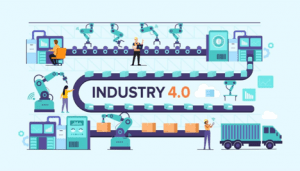
Before proceeding forwards, first of all, we must understand the concept of smart manufacturing. It is essential to answer the following question:
‘What is smart manufacturing. How is it related to IoT?’
Smart manufacturing (SM) is an approach that uses internet-based automation prospects and combines them with data analytics to enhance manufacturing performance.
Smart manufacturing solutions help factory managers to collect data automatically and analyze them to optimize production.
Now, how does IoT assist Smart Manufacturing in improvising their production?
The exciting part about the given technology is that it combines the best part of both wired and wireless connections and leverage it to monitor and manage the process in real-time. There’s more,
Taking the help of a reputed IoT application Development Company is good because you can:
- Latest Technology Stack on IoT implementation
- Forward-looking hardware and software
- Improve manufacturing outcomes
- Speed-up production
- Waste reduction
- Establish Overall Equipment Efficiency
There’s another secret that IoT comes up for Smart Manufacturing! It provides meaningful full insights on your production processes, resource utilization, the productivity of machine & workforce etc. It offers meaningful insights into the consumption of products by consumers. If you assess it, understanding features to provide real needs to the consumer at the marketplace are not a problem.
In the next step, we will evaluate current market statistics. Let’s move on.
A view of IoT in Industry 4.0
In the manufacturing sector, IoT Platform development is a hot topic of discussion, especially among people in management positions. According to the study from IDC, IoT-powered operations have seen a massive improvement of over $470 billion in value per year.
Modern smart factories have seen the biggest boost in their performance after implementing IoT and smart sensors. Now, IoT-enabled smart manufacturing (industry 4.0) shall see an annual growth rate of 12.4% by 2025.
Apart from them, another fact reveals the complete dominion of the IoT ecosystem in the SM. The projection of the global market for industry 4.0 will scale upwards from US$90.6 Billion in 2020 to US$219.8 Billion by 2026.
What do these facts signify?
It indicates optimization of IoT in smart factory 4.0 enhances business profitability. Moreover, implementing IoT helps smart manufacturing companies to offer automation solutions at reduced cost with no compromise on quality.
IoT Trends in Industrial Manufacturing
IoT is revolutionizing the world of industrial manufacturing manifold. It has made it possible in creating connected products and develops a service-based prototype to prepare the manufacturing sector with full digitalization.
Several trends will define the next path for industry 4.0:
1. Rise of M2M Automation
Machine-to-Machine Automation will become part of every manufacturing product to communicate and automate decisions with no involvement of human interactions. To make it more feasible, integrating data with enterprise software is the most probable solution.
2. Secured Cloud Solutions
Contrary to others, cloud-based IoT networks are less likely to get attacked by data breaches. Similarly, the evolution of information assurance (IA) services will likely reduce more cyber- attack.
3. IoT Data will Gain Prominence in Future
In the future, security will be given paramount importance by manufacturing sectors. So, they will collect big data from IoT platforms for any predictive analysis and generate a lot of digital insights over a period of time.
4. IoT & ERP will Modernize Supply Chain
There will be unique visibility in the supply chain, all thanks to a combination of ERP into IoT. Sophisticated ERP software will combine IoT to share and analyze data to make smart decisions and make accurate predictions for a better future.
IoT in Smart Clinic: Exploring New way of Smart Healthcare with IoT
Before moving forward, first, we will get our readers to understand the concept of the ‘smart clinic.’
As per the medical experts, smart clinics are a group of private healthcare service providers who thrive on delivering the best healthcare services through home monitoring tools, skin sensors, and wearable. Likewise, it is the place where a network of hospitals with their people, infrastructure, clinical processes, etc., comes under a single system to offer effective healthcare.
There are several and varied benefits that come with IoT-based Smart Clinics. They are as follows:
- IoT systems ensure safety for physicians and patients
- IoT system permits physicians to monitor patients with a high level of precision
- It allows easy integration for future-proofing
The next step will help the reader to analyze the market states about the smart clinic.
A view on IoT in Smart Clinic
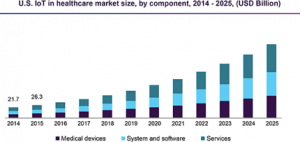
After the havoc played by COVID-19, the healthcare sector was smart enough to use IoT technology in the creation of a ‘smart clinic’. In addition, the emergence of technologies such as Artificial Intelligence (AI) and Machine Learning (ML) is driving the market demand for smart healthcare services.
Additionally, multiple facts showcase the importance of IoT in the smart clinic, such as:
- Global IoT in the healthcare market is expected to reach US$ 60.83 Billion (2019) to US$75 Billion (2027)
- By 2027, government healthcare institutions will account for about 15% of the market share in IoT-run smart clinic
As per the above facts there is a surge in the need for cost control measures. Moreover, a sudden increase in the demand for patient-centric care has compelled smart hospitals to opt for IoT connectivity.
Also, the arrival of Artificial Intelligence in healthcare has allowed healthcare providers to bank on real-time data for offering immediate healthcare services. This is where IoT technology help to develop connected devices to provide the data the healthcare provider seek for their information.
IoT Trends in Smart Clinic
With the dawn of 2022, several trends will define the essential role of IoT in the smart clinic. Some of them are:
a. Improvise Connectivity through 5G & Edge Computing
IoT app development solutions have opened vast floodgates by improving connectivity in healthcare services. It has been made possible through two innovative solutions: edge computing and 5G networks.
- 5G Networks: It offers greater security and high scalability. Besides, it also improves remote monitoring for patients and equipment.
- Edge Computing: It works with 5G to create decentralized infrastructure to minimize bandwidth issues and latency.
b. Remote Monitoring will Expand Manifold
In the future, the recent trends point towards the use of IoT solutions to monitor and track the assets of the patients. To maximize proficiency, a real-time location system (RLTS) will find more usage in limiting theft and misplacement of assets.
IoT in Telemedicine: Feature of Success in the Medical Sector
Before moving forward, first, we will understand the concept of telemedicine. There will be a question in the mind of people:
‘What is telemedicine, and how does IoT improvise the whole healthcare sector?’
Basically, telemedicine is the utilization of electronic information to offer and support healthcare facilities to patients residing in remote or inaccessible areas. Here, video and phone appointments take place between doctors and patients with telemedicine software to make their health better.
IoT in Telemedicine is another area of the healthcare industry that is rapidly growing. It has simplified the lives of busy individuals by allowing them to obtain medical treatment remotely at a reasonable cost.
There is tremendous growth going on in IoT in the telehealth industry. Just like that, several healthcare treatment procedures, and even IT communication has seen quite an improvement due to telemedicine software.
What’s more, for people suffering from chronic diseases, old age-related symptoms, or lifestyle illnesses, remote care through telehealth services is the best way to avail of health benefits.
Now, there is a question: ‘How is IoT actually a boon for telemedicine companies?’
There are many ways where IoT is helping telemedicine organizations to reach every nook and corner so that people can access improvised healthcare facilities. Some of them are:
- Doctors are the great beneficiary as they can retrieve essential data from medical devices via IoT wearable devices
- Real-time monitoring offers each minute details about the patient’s health every second
- Senior citizens can reward them with good healthcare without support through the use of speech-enabled devices like Alexa
Role IoT Plays in Telemedicine
If you are looking to integrate IoT in telehealth, then seek out some facts that demonstrate the supremacy of technology. Several aspects point towards it.
Let’s dig more into it:
- IoT in the healthcare market was at US$ 46.44 billion in 2020 that will surge to US$ 89.6 billion by 2026
- Amid COVID-19, the IoT-based healthcare market exhibited a marvelous growth rate at1%
The given fact reveals that people have become more aware of health. Even medical healthcare practitioners are vouching for IoT-based devices such as medical wearables. Due to them, almost 50% of people now are using wearable devices to monitor their health vitals like sugar levels, heart rate, and others easily. Further, doctors can collect info and offer medical aids based on it easily as per their convenience This has helped the healthcare providers to prescribe the best-in-class services and medications even remotely to the rural areas
IoT Trends in Telemedicine
IoT is expanding its footstep in every corner of the healthcare sector. Are you still having some concerns? Then let’s check out some trends that emphasize new aspects that will define the role of IoT in telemedicine.
So, we go through them:
a.Telehealth Robots will become a Reality in Remote Monitoring
IoT-run robots can replace doctors in remote patient monitoring. During COVID-19, many global hospitals utilized them to navigate patient checkups and permitted doctors to interact with them far away to avoid contact.
b. Personalized Healthcare will be Successful in Future
The future of telemedicine belongs to personalized healthcare. They will become a crucial factor in decreasing the risk of human loss by predicting health info in real-time and permitting doctors to use them in an emergency.
c. Integration of MHealth in Telemedicine will Reap Surplus
Simply speaking, it is an innovative way to use mobile technology to enhance the health goals of people. MHealth apps will assist patients to get better management of their health status that will enhance satisfaction rate among them and their physicians in the future.
Conclusion
At last, IoT platforms are gaining significant prominence in the manufacturing and healthcare sectors. With IoT solutions at the helm, smart manufacturing is unraveling enormous opportunities to automate industrial operations to build new systems from scratch.
Also, the telemedicine or telehealth development requirements are being in line with personalized healthcare services and are asking IoT platforms developers to create remote healthcare facilities to provide medical aid to the needy.
Hence, the future of IoT in smart manufacturing, smart clinic, and telemedicine is bright. So, it is correct to say IoT will remain omnipresent and offer more comfort and convenient facilities to the customers.